The Modern Emergency Fund: How Much You Really Need in 2024

Sarah Johnson
17 March 2026
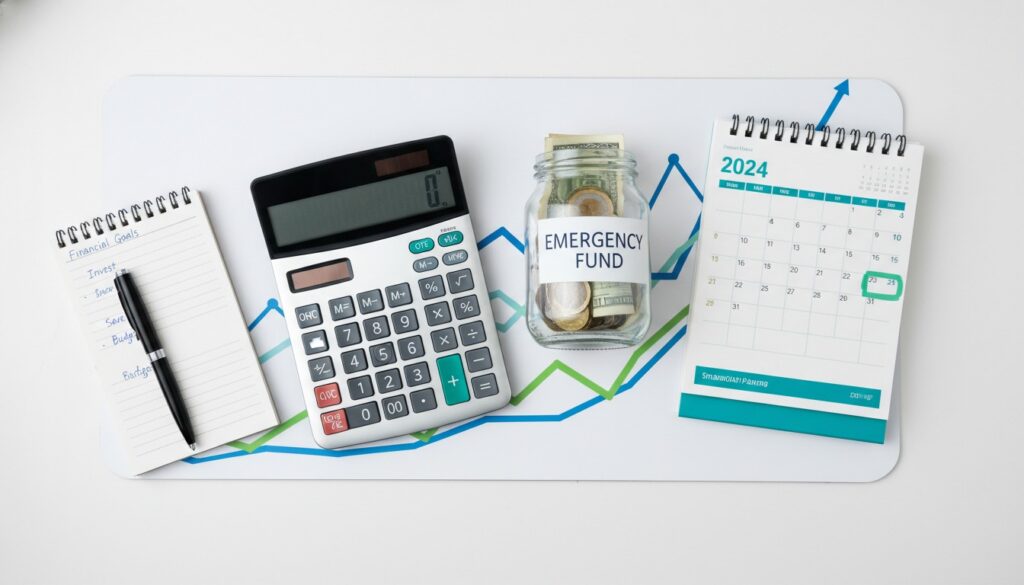
The Modern Emergency Fund: How Much You Really Need in 2024
Introduction
Remember when financial advisors confidently proclaimed that 3-6 months of expenses was the golden rule for emergency funds? Those days are officially over. The economic landscape of 2024 has fundamentally shifted, making traditional emergency fund calculations as outdated as flip phones.
With the rise of the gig economy, persistent inflation, remote work uncertainties, and increasingly volatile job markets, the old playbook simply doesn’t cut it anymore. Your emergency fund needs have evolved, and it’s time your strategy caught up.
In this comprehensive guide, we’ll break down exactly how much you need to save in 2024, considering your unique circumstances, income sources, and the new financial realities we all face. Whether you’re a freelancer juggling multiple clients, a traditional employee in an uncertain industry, or somewhere in between, you’ll discover a personalized approach to building your financial safety net.
The Death of the 3-6 Month Rule
The traditional emergency fund formula was born in a different era—one with stable employment, predictable career paths, and relatively low inflation. Today’s financial landscape tells a completely different story.
Why the Old Rule Falls Short
Consider these modern realities:
- Job recovery times have extended: The average job search now takes 3-6 months, with specialized roles often requiring 6-12 months
- Healthcare costs continue skyrocketing: Medical emergencies can easily exceed $50,000, far beyond typical emergency funds
- Inflation erodes purchasing power: Your emergency fund from 2020 has significantly less buying power today
- Multiple income streams require different protection: Gig workers face income volatility that traditional employees never experienced
- Technology dependencies: Home office equipment, internet upgrades, software subscriptions
- Remote work transitions: Potential relocation costs, co-working space memberships
- Skill development: Professional courses, certifications, or retraining programs during unemployment
- Extended family support: Many adults now support aging parents or adult children
- Base calculation: 4-6 months of expenses
- Risk multiplier: 1.0x
- Base calculation: 6-9 months of expenses
- Risk multiplier: 1.2x
- Base calculation: 8-12 months of expenses
- Risk multiplier: 1.5x
- Base calculation: 6-10 months of expenses
- Risk multiplier: 1.3x
- Base calculation: 10-18 months of expenses
- Risk multiplier: 1.8x
- Specialized skills/niche industry: +2-3 months
- Single income household: +3-4 months
- Chronic health conditions: +4-6 months
- Dependents (children/elderly parents): +2-3 months per dependent
- High-cost living area: +2-4 months
- Mortgage vs. rent: +1-2 months (homeowners face additional repair costs)
- Housing (mortgage/rent, utilities, insurance)
- Food (grocery budget, not dining out)
- Transportation (car payments, insurance, gas, maintenance)
- Healthcare (insurance premiums, medications, regular appointments)
- Debt payments (minimum payments only)
- Basic phone and internet
- COBRA health insurance premiums (often 3x your current cost)
- Job search expenses (networking, interview travel, professional development)
- Increased stress spending (therapy, stress-relief activities)
- Home maintenance (things break when you can least afford it)
- High-yield savings account
- Money market account
- Goal: Instant access for urgent needs
- Certificates of deposit (CDs) with 3-6 month terms
- Treasury bills
- Goal: Higher returns with minimal risk
- Conservative investment portfolio
- I-bonds (inflation-protected)
- Goal: Protection against inflation while maintaining liquidity
- High earners: May need less than full income replacement due to reduced tax obligations
- Lower-middle income: Often need 100%+ replacement due to limited expense flexibility
- Variable income earners: Calculate based on average monthly income over 24 months
- Multiply base calculation by 1.3-1.5x
- Consider relocation costs in calculations
- Standard calculations apply
- Factor in regional job market conditions
- May reduce base calculation by 10-20%
- But consider limited local job opportunities
- Start with just 2-3% of income
- Increase by 1% every three months
- Treat it like a non-negotiable bill
- Tax refunds: 75% to emergency fund, 25% for enjoyment
- Bonuses: 50% emergency fund, 50% split between other goals
- Side hustle income: 60% emergency fund until target reached
- Freelance your existing skills
- Sell unused items
- Participate in the sharing economy (Uber, Airbnb, TaskRabbit)
- Goal: Accelerate timeline without impacting lifestyle
- Interest rates often exceed 25%
- Credit limits can be reduced during economic downturns
- Adds debt stress during already stressful times
- No interest earned
- Too easy to spend accidentally
- No protection against inflation
- Market downturns often coincide with job losses
- Forced to sell investments at losses
- Defeats the purpose of financial security
- After major life changes (marriage, children, home purchase)
- Annual income increases
- Career changes or industry shifts
- Economic environment changes
- Job loss or significant income reduction
- Major medical expenses
- Essential home repairs (roof, HVAC, plumbing)
- Car repairs necessary for work
- Family emergencies requiring travel
- Vacations (even “needed” ones)
- Holiday gifts
- Home improvements or upgrades
- Investment opportunities
- Non-essential purchases, even if discounted
- Pause other savings temporarily to rebuild quickly
- Set a specific timeline for replacement (typically 6-12 months)
- Consider the cause – do you need to adjust your target amount?
- Automate the rebuilding process to ensure it happens
- Calculate your personalized target using the framework above
- Open a dedicated high-yield savings account separate from your checking
- Set up automatic transfers for at least $50-100 per paycheck
- Schedule quarterly reviews to assess progress and adjust targets
The Hidden Costs of Modern Emergencies
Today’s emergencies often come with additional expenses our parents never considered:
“The emergency fund that worked for my parents’ generation simply doesn’t address the complexities of modern financial life.” – Financial Planning Association
Your 2024 Emergency Fund Calculator
Instead of relying on outdated rules, let’s build a personalized emergency fund strategy based on your actual risk factors and circumstances.
Step 1: Assess Your Income Stability
Traditional W-2 Employees (Stable Industries)
Traditional W-2 Employees (Volatile Industries)
Freelancers/Contractors (Single Client)
Freelancers/Contractors (Multiple Clients)
Business Owners
Step 2: Factor in Personal Risk Elements
Add additional months based on these factors:
Step 3: Calculate Your True Monthly Expenses
Don’t just use your current spending—consider emergency-mode expenses:
Essential Categories:
Emergency-Specific Additions:
Advanced Emergency Fund Strategies for 2024
The Tiered Approach
Rather than keeping everything in a single low-yield savings account, consider a three-tier system:
Tier 1: Immediate Access (1-2 months expenses)
Tier 2: Short-term Access (3-6 months expenses)
Tier 3: Extended Emergency (6+ months expenses)
The Income Replacement Strategy
Instead of focusing solely on expenses, consider income replacement ratios:
Geographic Considerations
Your location dramatically impacts your emergency fund needs:
High-Cost Areas (SF, NYC, DC)
Medium-Cost Areas
Low-Cost Areas
Building Your Fund in Today’s Economy
With inflation and competing financial priorities, building a substantial emergency fund feels more challenging than ever. Here’s how to make it manageable:
The Automated Approach
Set up automatic transfers immediately after each paycheck:
Windfall Strategy
Allocate unexpected money strategically:
The Side Hustle Accelerator
Consider temporary income boosts specifically for emergency fund building:
Common Emergency Fund Mistakes to Avoid
Mistake 1: Using Credit Cards as Emergency Funds
Why it’s dangerous:
Mistake 2: Keeping Everything in Checking
The problem:
Mistake 3: Investing Emergency Funds Aggressively
The risk:
Mistake 4: Never Adjusting the Target
Remember to recalculate:
When and How to Use Your Emergency Fund
Qualifying Emergencies
Clear Yes:
Probably Not:
The Replacement Strategy
When you do use emergency funds:
Conclusion
The financial landscape of 2024 demands a more sophisticated approach to emergency planning. The old 3-6 month rule isn’t just inadequate—it’s potentially dangerous in today’s volatile economic environment.
Your modern emergency fund should reflect your actual risk factors: income stability, family obligations, health considerations, and career prospects. For most people, this means saving significantly more than traditional advice suggested, but with smarter strategies for building and managing these funds.
Remember, an emergency fund isn’t just about surviving financial setbacks—it’s about maintaining your financial momentum and life choices during challenging times. The peace of mind alone is worth the effort.
Start where you are, use what you have, and build systematically. Your future self will thank you when life inevitably throws its next curveball.
Take Action Today
Don’t let analysis paralysis prevent you from starting. Begin building your modern emergency fund this week:
Ready to take control of your financial security? Start calculating your personalized emergency fund target today and take the first step toward true financial peace of mind.